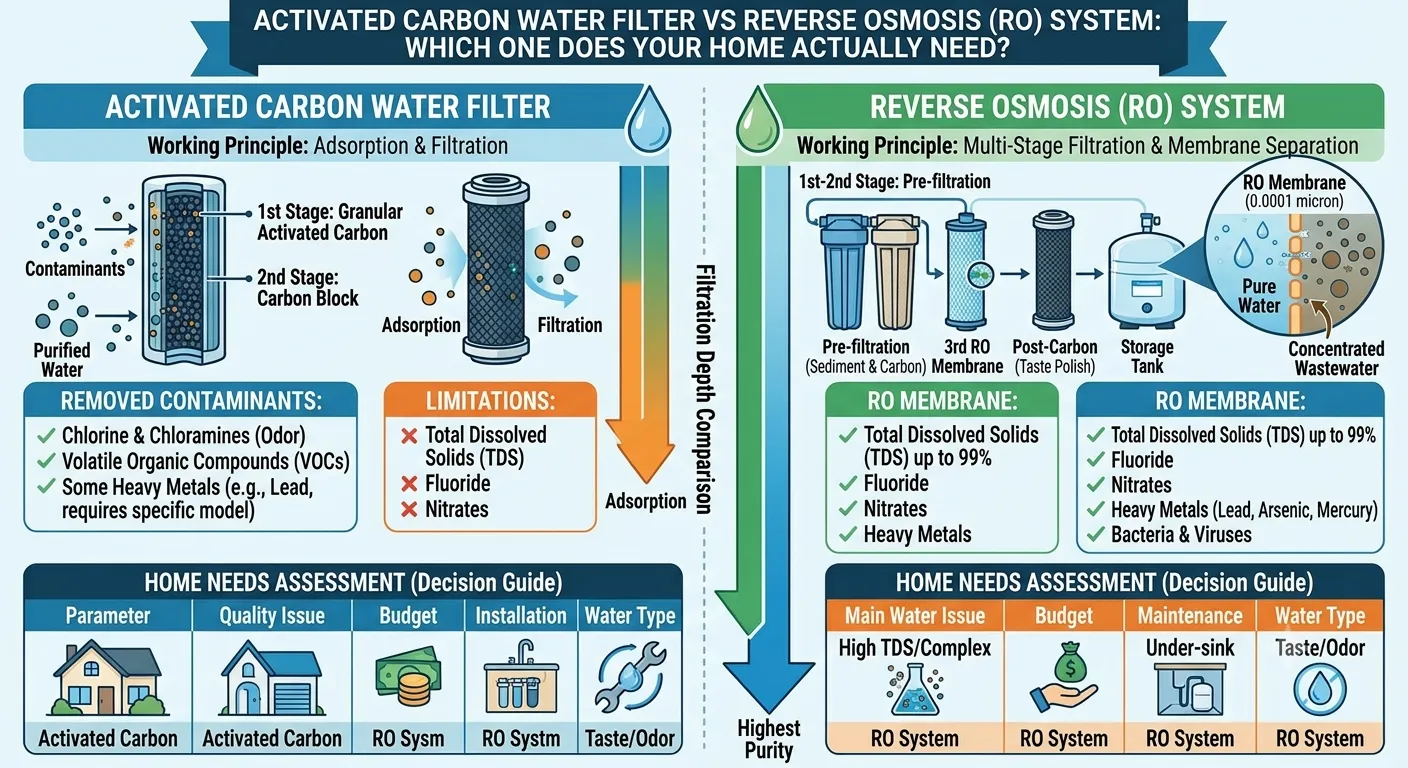
Activated Carbon Water Filter vs RO System: Which One Does Your Home Actually Need?

arancia
July 16, 2026 • 16 min read
An activated carbon water filter removes chlorine, chloramines, VOCs, and taste and odor problems — reliably and affordably. A reverse osmosis (RO) system does all of that, and also removes lead, nitrates, fluoride, PFAS, arsenic, bacteria, and dissolved heavy metals that carbon alone cannot touch. The decision between the two comes down to one question: what is actually in your water? If the answer is primarily chlorine and organic compounds, an activated carbon water filter is sufficient. If the answer includes dissolved ionic contaminants — which it does for a significant proportion of households — carbon is not enough, and RO is the appropriate solution.
Most households get this decision wrong in one of two directions: they buy an RO system for a water problem that an activated carbon water filter would solve just as well at a fraction of the cost, or they buy a carbon pitcher and assume their water is fully treated when it isn’t touching the contaminants that matter most. This guide gives you a framework for matching the right system to your actual situation — not just a list of specs.
| Activated Carbon Filter | RO System | |
|---|---|---|
| Removes chlorine / chloramines | ✅ Excellent | ✅ Yes (pre-filter stage) |
| Removes VOCs / pesticides | ✅ Good | ✅ Yes |
| Removes lead | ❌ Not reliably | ✅ Up to 98% |
| Removes nitrates | ❌ No | ✅ Up to 98% |
| Removes fluoride | ❌ No | ✅ Up to 96% |
| Removes PFAS | ⚠️ Partial (carbon block only) | ✅ 95%+ |
| Removes bacteria | ❌ No | ✅ Physically blocked |
| Reduces TDS | ❌ No | ✅ Up to 98% |
| Retains healthy minerals | ✅ Yes | ⚠️ Removes (add-back optional) |
| Upfront cost (retail ref.) | $30–$150 | $280–$600 (imported systems) |
| Annual maintenance | $20–$60 | $80–$200 |
| 3-Year TCO | ~$90–$270 | ~$550–$1,100 |
| Wastewater produced | None | 2–4L per 1L purified |
→ View the Watpur RO Water Purifier — 100G, 400G, and 600G models
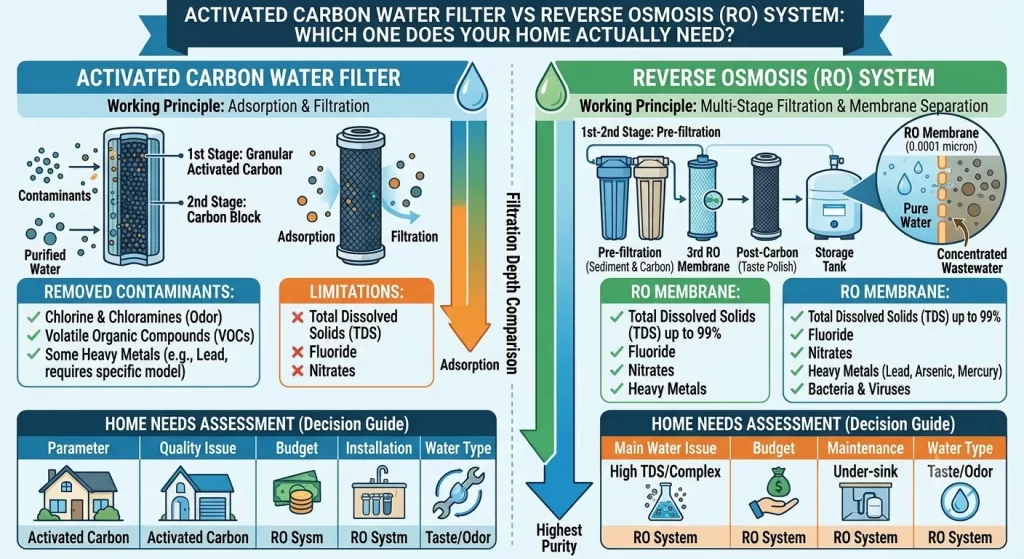
How an Activated Carbon Water Filter Works
An activated carbon water filter works through adsorption: as water passes through a porous carbon matrix, organic molecules and certain chemicals are attracted to and trapped on the carbon’s internal surface area. One gram of activated carbon has a surface area exceeding 32,000 square feet — the result of a high-temperature activation process that opens millions of microscopic pores in the carbon material.
This mechanism is exceptionally effective at removing chlorine, chloramines, trihalomethanes (THMs), hydrogen sulfide, VOCs, pesticides, herbicides, and the organic compounds responsible for most taste and odor problems in municipal water. The limitation is equally precise: adsorption captures organic molecules and certain chemical compounds, but it has no meaningful effect on dissolved ionic contaminants. Lead ions (Pb²⁺), nitrate compounds (NO₃⁻), fluoride ions (F⁻), dissolved arsenic, and PFAS compounds pass through carbon media largely untouched.
One important exception: high-quality compressed carbon block filters — not granular activated carbon pitchers — can achieve partial PFAS reduction of 50–70% due to longer contact time and denser media. This falls well short of the 95%+ PFAS reduction that an RO membrane achieves, but it is meaningfully better than no treatment.
How a Reverse Osmosis System Works
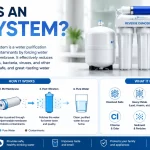
Reverse osmosis forces water through a semipermeable membrane with pores of approximately 0.0001 micrometers — small enough that only water molecules pass through. Dissolved ions, heavy metals, nitrates, fluoride, PFAS, bacteria, and pharmaceutical residues are rejected by the membrane and flushed to drain, achieving TDS reduction of up to 98% under standard operating conditions.
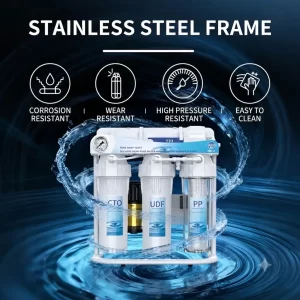
The point most comparison articles miss: a 7-stage RO system already contains an activated carbon water filter as its second and third filtration stages. Carbon pre-filters protect the RO membrane from chlorine damage — chlorine degrades the polyamide membrane material rapidly, shortening its lifespan from 18–24 months to as little as 6. Choosing RO over carbon is therefore not a trade-off: you get carbon filtration as part of the RO system, plus the membrane’s ionic rejection capability on top. The question is never carbon or RO — it’s whether your water requires the additional capability that only the membrane provides.
Scenario 1: Municipal Water, Taste and Chlorine Are the Only Concerns
Your tap water meets EPA drinking water standards, your building is modern, TDS reads below 300 ppm, and the main problem is that it tastes or smells of chlorine. No vulnerable household members such as infants, pregnant women, or elderly individuals with compromised kidney function.
The right choice: activated carbon water filter.
For this scenario, an activated carbon water filter is both sufficient and appropriate. Municipal water has already been treated for bacterial and heavy metal compliance. The residual chlorine and chloramines that create the swimming-pool taste are exactly what activated carbon excels at removing. A quality under-sink carbon block filter certified to NSF/ANSI 42 resolves the problem without the cost, wastewater, or maintenance complexity of an RO system.
What to verify before buying: if your utility uses chloramines rather than free chlorine — increasingly common in US municipal systems — look specifically for catalytic carbon block, not standard GAC. Standard granular activated carbon is significantly less effective against chloramines and will underperform within weeks of installation in chloraminated water supplies.
Scenario 2: Municipal Water, TDS Above 300 ppm, Scale and Taste Issues
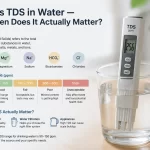
Your TDS meter reads 300–600 ppm. Water leaves mineral scale on appliances and kettles, tastes slightly bitter or salty, and you’ve noticed shortened appliance lifespans. No confirmed contamination concern beyond dissolved minerals.
The right choice: RO for drinking water.
At TDS above 300 ppm, the dissolved mineral load creates real practical problems: scale buildup in kettles and coffee machines, shortened water heater elements, and water that tastes noticeably off. An activated carbon water filter does not reduce TDS — it passes dissolved minerals through entirely. Only RO membrane separation reduces TDS, typically by 90–98%, bringing high-mineral tap water to 6–30 ppm at the outlet.
The practical setup for this scenario is an under-sink RO for drinking and cooking water, which addresses both taste and dissolved mineral concerns at the point of use. If whole-house chlorine is also a concern, a whole-house carbon filter at the point of entry handles that separately — but scale throughout the plumbing requires a water softener, which is a distinct decision from either carbon or RO.
Scenario 3: Well Water, Older Building, or Confirmed Contaminant Risk
Your water comes from a private well; your building predates 1986 when lead pipe use was banned in the US; your local water quality report shows elevated nitrates, arsenic, or lead; or you live in an agricultural area with known fertilizer runoff.
The right choice: RO. An activated carbon water filter alone is not adequate.
This is the scenario where getting the choice wrong carries genuine health consequences. Private wells are not subject to EPA monitoring, and agricultural areas carry elevated nitrate risk — nitrates cause infant methemoglobinemia at high concentrations and are not removed by any form of carbon filtration. Boiling water concentrates nitrates rather than removing them. Buildings with pre-1986 plumbing may have lead solder joints that release lead ions into standing water — dissolved ionic contaminants that pass through activated carbon water filters entirely.
For any of these situations, an RO system addresses lead, nitrates, arsenic, and PFAS simultaneously in a single system. If bacterial contamination from well water is also a concern, adding a UV sterilizer as a final stage provides a 99.9% pathogen kill rate after the membrane.
Scenario 4: Household with Babies, Pregnant Women, or Elderly Members
Your household includes formula-fed infants, a pregnant woman, or elderly family members with reduced kidney function — regardless of water source or TDS reading.
The right choice: RO, with UV upgrade recommended.
The physiological sensitivity of these three groups to lead, nitrates, and PFAS is documented at exposure levels that produce no detectable effects in healthy adults. There is no established safe level of lead exposure for infants or during pregnancy. Nitrates at concentrations meeting EPA limits for adults can cause blue baby syndrome in infants. PFAS accumulates in body tissue rather than being cleared efficiently by the kidneys — and elderly individuals with declining renal function face compounding accumulation risk.
For this scenario, the contaminant coverage gap between an activated carbon water filter and an RO system is simply too significant to accept. The Watpur 7-stage RO system with the UV sterilizer upgrade is the appropriate configuration: the membrane handles ionic contaminants, and the UV stage covers microorganisms introduced after filtration.
→ View the Watpur RO Water Purifier
Certifications: How to Verify Before You Buy
For both activated carbon water filters and RO systems, independent certification is the only reliable way to distinguish genuine contaminant reduction from marketing language.
Certifications for Activated Carbon Filters
NSF/ANSI 42 covers aesthetic effects — chlorine, taste, and odor reduction. This is the baseline certification for any carbon filter sold for drinking water improvement. NSF/ANSI 53 covers health-effects contaminant reduction including lead and VOCs — a carbon filter claiming lead reduction must hold this certification for lead specifically. NSF/ANSI 401 covers emerging contaminants including certain PFAS compounds; required for any carbon block filter claiming PFAS reduction.
Certifications for RO Systems
NSF/ANSI 58 covers the complete RO system and verifies TDS rejection and contaminant reduction claims under standardized laboratory conditions — the primary certification to require. NSF/ANSI 53 in combination with NSF/ANSI 58 provides the most comprehensive documented protection for households with health-specific concerns.
The Watpur RO system holds CCC certification (electrical safety), ISO 9001 quality management certification, and a provincial health permit (Certificate No.: Yue Wei Shui Zi [2024]-02-S0439). Verify any NSF certification number at nsf.org/certified-products — search the brand name and confirm the specific model is listed, not just a component. Language such as “NSF-equivalent tested” or “meets NSF standards” means independent certification was not obtained.
What Each System Actually Costs Over Three Years
Upfront price is the least useful comparison point because the decision should account for what you get at each price tier and what long-term maintenance looks like.
| Cost Item | Carbon Filter | RO System (market ref.) |
|---|---|---|
| Device purchase | $30–$150 | $280–$600 |
| Annual filter replacement | $20–$60/year | $80–$200/year |
| RO membrane (every 12–24 months) | N/A | $30–$60/replacement |
| Wastewater cost | None | ~$5–$15/year |
| 3-Year TCO | ~$90–$270 | ~$550–$1,100 |
The cost gap is real and worth stating directly: for Scenario 1 households (municipal water, taste only), the difference in three-year TCO is not justified by any meaningful additional protection. For Scenarios 2–4, a carbon filter’s lower cost provides no protection against the specific contaminants driving the decision — which means the lower-cost option delivers effectively zero value for the actual problem.
The comparison that reframes RO cost: a family of four purchasing bottled water for drinking and cooking spends approximately $730–$800 per year. The three-year TCO of a Watpur RO system sits below the market reference range and typically pays for itself within the first year for bottled-water-dependent households. The cost difference between Watpur and equivalent imported systems typically covers two or more full years of filter replacements.
→ Contact us for current Watpur pricing and availability
Conclusion
The activated carbon water filter vs RO decision is not about which technology is superior — it is about matching the right tool to the actual problem. An activated carbon water filter is effective, affordable, and sufficient for households on treated municipal water with no specific contaminant concerns beyond chlorine, taste, and odor. RO filtration is necessary when dissolved ionic contaminants are present or likely, or when household members have elevated physiological sensitivity to these substances.
Three steps to make the right decision:
- Test your tap water TDS and read your annual water quality report. TDS above 300 ppm, confirmed elevated nitrates or lead, or a pre-1986 building all point to RO. TDS below 200 ppm on municipal water with no specific concerns points to an activated carbon water filter.
- Identify your household risk profile. Infants, pregnant women, or elderly members make RO the appropriate minimum standard regardless of TDS reading.
- Match the system to the problem, not to the price. An activated carbon water filter is not a budget RO — it solves a different set of problems entirely.
→ View the Watpur RO Water Purifier and choose your model
FAQ
Q1: Can an activated carbon water filter remove lead from tap water?
Standard GAC filters do not reliably remove dissolved lead ions. Certain compressed carbon block filters certified to NSF/ANSI 53 for lead achieve partial reduction, but not at the level of an RO membrane. If lead is a confirmed or suspected concern — particularly in buildings predating 1986 — an RO system is the appropriate solution.
Q2: Does choosing RO mean I no longer need a carbon filter?
No. A properly designed RO system includes an activated carbon water filter as an essential pre-filtration stage — carbon removes chlorine before water reaches the membrane, because chlorine degrades the polyamide membrane material and shortens its lifespan. Choosing RO means you get both carbon filtration and membrane separation in one system.
Q3: My water tastes fine — does that mean I don’t need RO?
Not necessarily. Lead, nitrates, PFAS, and arsenic have no taste, color, or smell at typical residential concentrations. The correct diagnostic is your annual municipal water quality report and, where applicable, a certified laboratory test — not taste alone.
Q4: Is a carbon pitcher filter the same as an under-sink carbon filter?
No. Pitcher filters have short contact times and small carbon beds — they reduce chlorine and improve taste adequately, but performance against VOCs, THMs, and heavy metals is limited and inconsistent. Under-sink carbon block filters have longer contact time, higher media density, and typically hold certifications that pitchers do not. For health-effects contaminant reduction, verify NSF/ANSI 53 certification specifically.
Q5: How much water does an RO system actually waste?
A conventional RO system uses 2–4 liters for every 1 liter of purified output, adding approximately $5–$15 to the annual water bill for most households — less than one month of bottled water purchases for a family of four. Tank-free designs reduce this ratio compared to traditional pressurized-tank systems, and rejected water can be routed to plant watering or cleaning where local conditions permit.