Spring Water vs Purified Water: What’s the Real Difference for Your Home?

arancia
July 13, 2026 • 18 min read
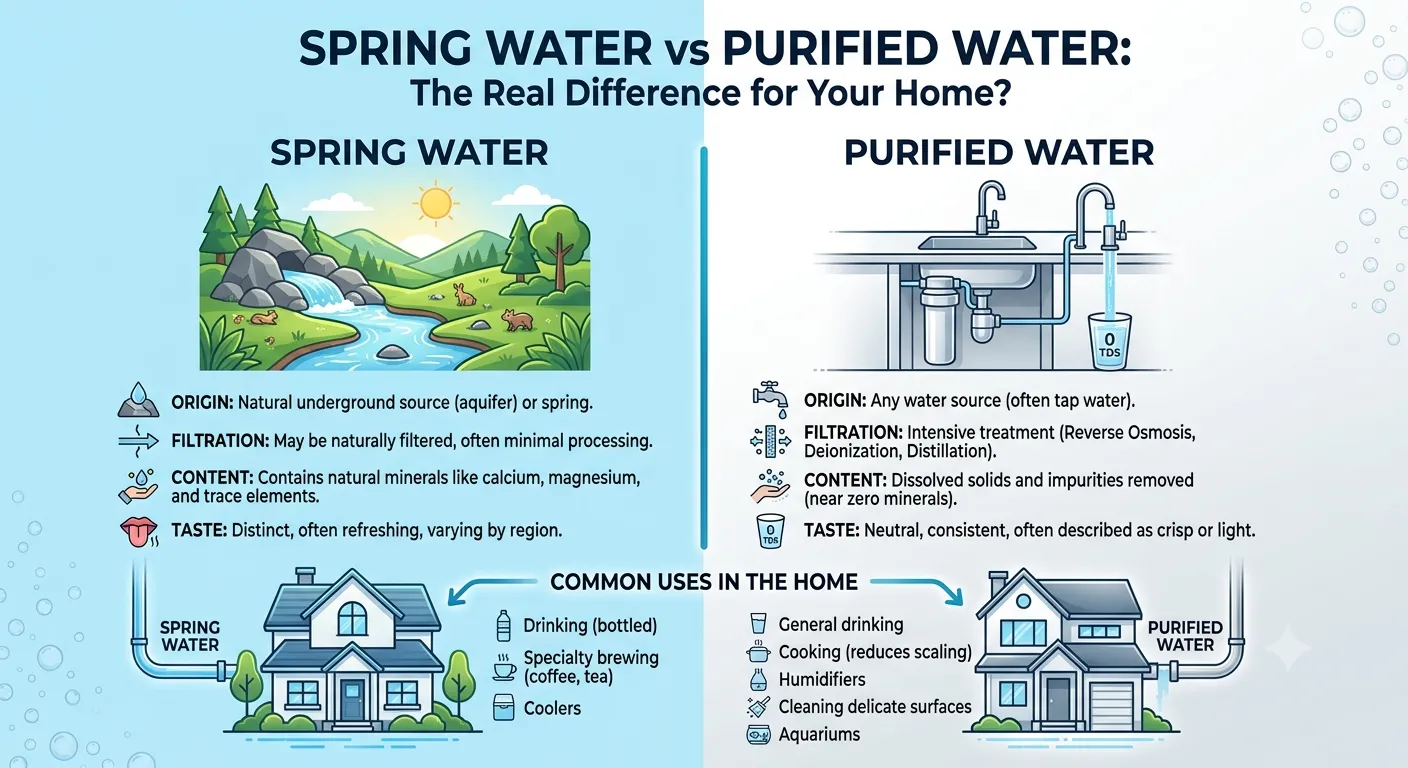
Both spring water and purified water are safe to drink — but they work on completely different logic, and that difference has real implications for your household’s health, budget, and daily convenience. Spring water is defined by its source; purified water is defined by its treatment. Understanding which one actually fits your home starts by knowing what those two definitions mean in practice.
For most households on municipal tap water with any concern about heavy metals, chlorine byproducts, or consistent water quality, purified water — especially from a home RO system — delivers better long-term value than buying bottled water of any kind, spring or purified. Here’s the evidence behind that conclusion, and the cases where spring water still makes sense.
| Spring Water | Purified Water | |
|---|---|---|
| Defined by | Source (underground aquifer) | Treatment process |
| Mineral content | Naturally retained, 50–500 ppm TDS | Mostly removed, <10 ppm TDS |
| Contaminant removal | Light filtration, minerals preserved | Comprehensive — RO removes 95–99%+ |
| Taste | Distinct, varies by source region | Neutral, consistent |
| Regulatory standard | FDA bottled water source rules | FDA/EPA: ≤10 ppm TDS after treatment |
| At-home option? | No | Yes — countertop or under-sink RO |
What Is Spring Water?
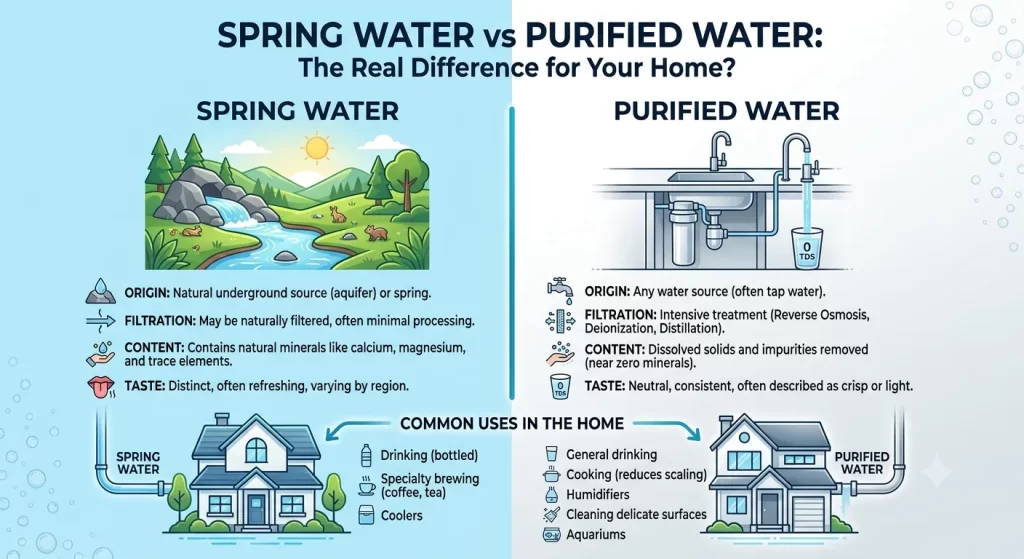
Spring water originates from an underground aquifer and must be collected at the point where water naturally rises to the surface, or through a dedicated borehole tapping that same formation. The FDA is specific: only water that comes up naturally from underground can legally be labeled “spring water,” and it must retain the same composition after any treatment as it had when collected.
The Most Misunderstood Thing About Spring Water Labels
The “100% pure” language on spring water packaging refers to the source of the water, not the water’s cleanliness. It means 100% of the contents came from a spring — not that the water has been purified. This is one of the most effective pieces of marketing language in the food industry, and it routinely misleads consumers into assuming spring water equals clean water.
In practice, spring water goes through light carbon filtration — primarily to remove chlorine added during transport to the bottling facility — but this process deliberately preserves the mineral content. The trade-off is that it also preserves nitrates, trace heavy metals, and other dissolved contaminants present in the original aquifer. Since springs feed rivers, spring water can contain many of the same impurities found in well or tap water.
What Spring Water Actually Offers
Spring water’s genuine selling point is its natural mineral profile. As water travels through rock and soil underground, it absorbs calcium, magnesium, and potassium — giving spring water a TDS range of roughly 50–500 ppm and a distinct regional taste that varies by geology. Some people find this character more appealing than the neutral taste of purified water, and for healthy adults eating a varied diet, the mineral content causes no harm.
The real concern is source variability. Spring water quality depends on what’s happening above and around the aquifer — agricultural runoff, industrial activity near recharge zones, and seasonal rainfall all affect mineral concentrations and contaminant load from batch to batch.
What Is Purified Water?
Purified water isn’t defined by where it comes from — it’s defined by what happens to it. Per the FDA, the term applies to any water treated through distillation, deionization, or reverse osmosis, and the EPA specifies the output must contain no more than 10 ppm of total dissolved solids. Purified water can start as groundwater, spring water, or municipal tap water. The source doesn’t matter; the treatment standard does.
How Reverse Osmosis Purification Works
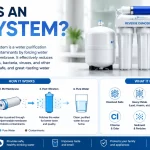
The most common purification method in both bottled purified water and home systems is reverse osmosis (RO): water is pushed under pressure through a semi-permeable membrane with a pore size of 0.0001 micrometers — 10,000 times finer than a human hair. This membrane physically blocks dissolved ions, heavy metals, bacteria, pharmaceutical residues, and PFAS compounds. RO membranes remove dissolved solids at roughly 95–99% efficiency, producing water with a TDS well under 10 ppm.
The result is water whose quality is determined by the system, not the source. Whether the incoming water came from a river, an aquifer, or a city main, the purification output meets the same standard every time — which is why hospitals, laboratories, and infant formula preparation guidelines consistently favor purified water over spring.
The Mineral Trade-Off
RO membranes cannot distinguish between harmful contaminants and beneficial minerals — both are rejected along with everything else. This is why advanced home RO systems often include a remineralization stage that adds calcium and magnesium back in controlled amounts after filtration. Without remineralization, purified water has a noticeably flat or empty taste that many users find off-putting at first.
If you’re evaluating a home RO purifier, remineralization is a meaningful feature to look for — or to add as an optional upgrade.
Health Comparison: Is One Actually Better for You?
For healthy adults eating balanced diets, neither type of water is meaningfully “healthier” than the other as a source of minerals — drinking water contains only trace quantities, far too small to contribute significantly to daily nutritional needs. The more relevant health question is contaminant removal.
When Purified Water Has a Clear Advantage
Purified water’s comprehensive contaminant removal matters most in three situations.
Local water quality concerns. Municipal water in most US cities is treated and safe, but it travels through aging distribution infrastructure before reaching your faucet — picking up rust, sediment, and trace metals from corroded pipes along the way. Chlorine added at treatment plants reacts with organic matter in transit to form disinfection byproducts that a basic carbon filter cannot adequately address. An RO system removes these at the membrane level.
Households with vulnerable members. Infants, pregnant women, elderly family members, and anyone with a compromised immune system face higher risks from the specific contaminants — lead, nitrates, bacteria — that spring water’s light filtration may not eliminate. The consistency of purified water’s contaminant removal makes it the lower-risk choice when stakes are higher.
Appliance compatibility. Minerals in spring water cause scale buildup in humidifiers, CPAP machines, kettles, and steam irons. Purified water is the correct choice for any water-using appliance where mineral deposits reduce performance or lifespan.
When Spring Water Makes Sense
Spring water remains a reasonable choice if you genuinely prefer the taste and you’re buying from brands with transparent source testing and documented quality standards. The taste advantage is real for some people — and hydration consistency matters more than water type for overall health. If you’ll drink more water because you prefer how spring water tastes, that’s a legitimate reason to choose it.
The significant caveat: a 2024 study published in the Proceedings of the National Academy of Sciences found that a single liter of bottled water contains, on average, 240,000 microscopic plastic fragments — regardless of whether the contents are spring water or purified water. The plastic contamination issue is inherent to the bottle, not the water type inside it.
The Real Cost Comparison: Where Families Are Actually Spending
This is where the spring vs. purified debate becomes a different conversation entirely — because for most households, the true financial decision isn’t between two types of bottled water. It’s whether to keep buying bottled water of any kind, or to switch to home purification.
What US Families Actually Spend on Bottled Water
Purchasing bottled drinking water costs a family an average of $1,350 a year. That number varies sharply by brand. Budget bottled water (such as Walmart’s Great Value) costs roughly $0.00727 per ounce — about $723 per year for a family of three consuming 91 oz per person daily. Premium brands are dramatically more expensive: a family of three drinking Smartwater can spend approximately $4,902 per year — over $14,700 across three years.
Spring water typically sits above the midpoint of that range, as protected spring sources require longer-distance transport and command a retail premium. In most stores, spring water is priced approximately 20–50% higher than purified bottled water.
The Home Purification Alternative
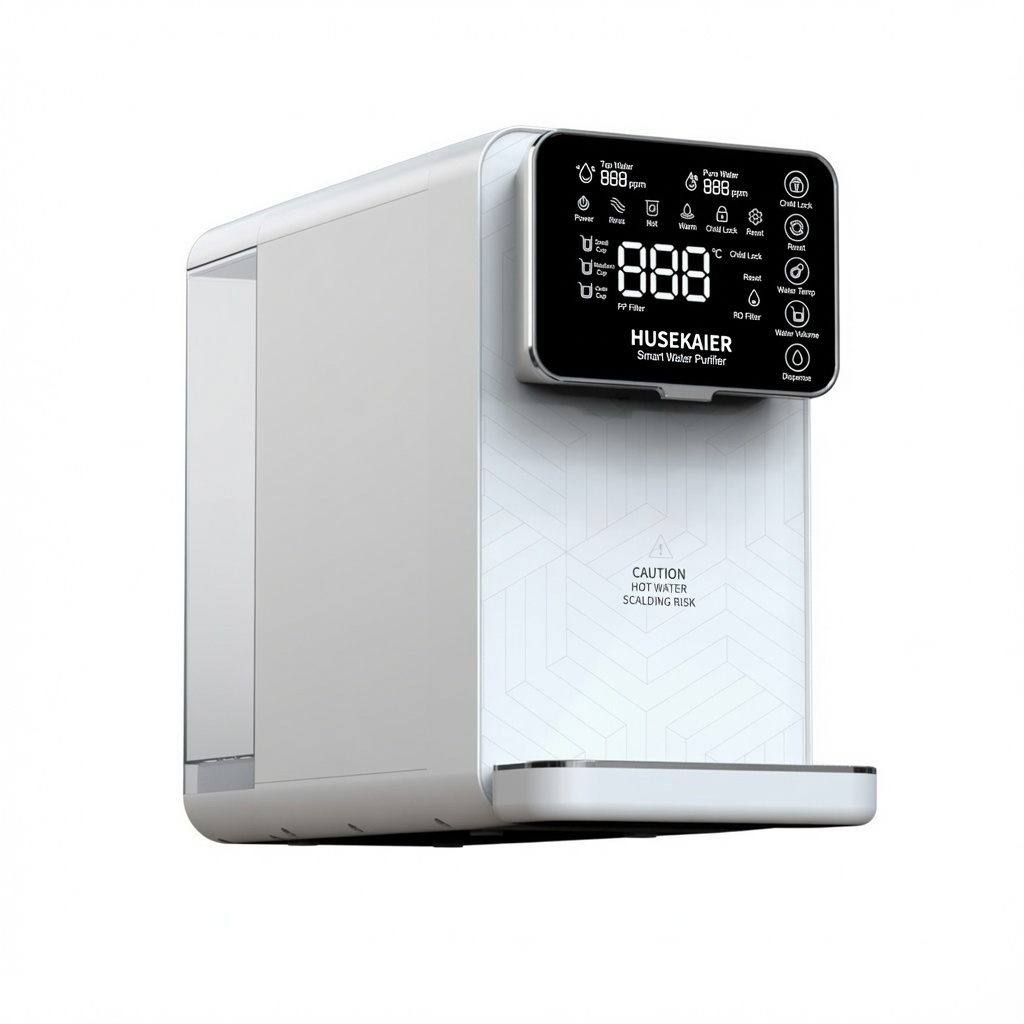
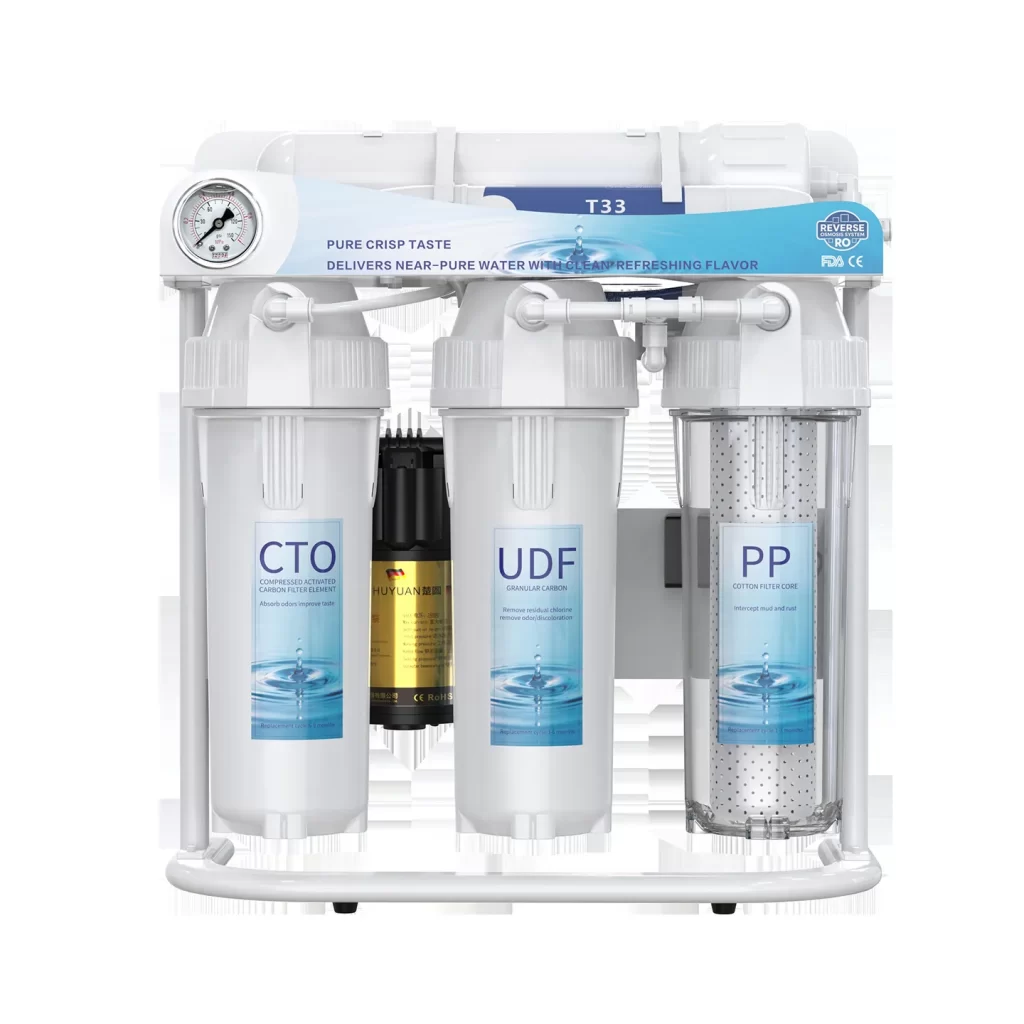
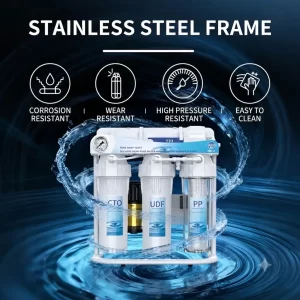
A home RO water purifier breaks this cycle. Instead of paying per gallon indefinitely, you pay once for the system and then pay only for periodic filter replacements.
The Watpur ZENTA RO Water Purifier (7-stage, available in 100G, 400G, and 600G output models) illustrates this math clearly. Based on the product’s own maintenance specifications, annual filter cartridge replacement for a standard 5-stage configuration runs approximately $50–$120 per year depending on local water quality and household consumption. The RO membrane itself typically lasts 12–24 months before replacement.
| Drinking Water Option | Typical Annual Cost (family of 3–4) | Notes |
|---|---|---|
| Budget bottled water | ~$700–$1,000 | e.g., store-brand 24-packs |
| Mid-range spring water | ~$1,200–$1,800 | e.g., Poland Spring, Evian |
| Premium bottled water | ~$3,000–$5,000+ | e.g., Smartwater, Fiji |
| Home RO system (ongoing) | ~$50–$120/year | Filter replacements after initial unit purchase |
The break-even point between a home RO purifier and mid-range bottled water spending is typically reached within 6–10 months of purchase, after which ongoing savings accumulate year over year.
Beyond cost, home purification eliminates the plastic bottle waste stream entirely — studies reveal that bottled water production consumes up to 2,000 times more energy than tap water, and filtering tap water at home is the most sustainable choice, with reusable stainless steel or glass bottles further reducing environmental impact.
Certifications and Safety Standards: What to Verify
For Bottled Water (Spring or Purified)
Both types are FDA-regulated. Look for NSF International certification on the label — this means an independent third party has verified the product against its claims. You can search any NSF certificate number at nsf.org/certified-products to confirm it’s genuine, not a lookalike phrase like “NSF-style tested” or “meets NSF standards.”
For Home RO Purification Systems
These are the certifications that actually matter when buying a home water purifier:
NSF/ANSI 58 — the standard specifically for reverse osmosis systems, verifying that the RO membrane and system components reduce contaminants at the rates claimed. This is the primary performance certification to look for.
NSF/ANSI 42 — covers aesthetic improvements including chlorine taste and odor reduction.
NSF/ANSI 61 — confirms that wetted components (filters, tubing, housings) don’t leach harmful substances into the water they’re filtering.
CCC (China Compulsory Certification) and ISO 9001 confirm electrical safety and manufacturing consistency respectively — relevant for imported units operating at 110V or 220V. Watpur’s ZENTA RO purifier holds both CCC certification and ISO 9001, along with a Chinese health authority hygiene permit (Certificate No.: Yue Wei Shui Zi [2024]-02-S0439), verifying compliance with China’s strict water treatment equipment standards.
Conclusion
Spring water and purified water are both safe drinking choices — but they serve different needs and sit at very different price points when you account for long-term household consumption. Spring water offers natural minerals and regional taste character; purified water offers maximum contaminant removal, batch-to-batch consistency, and the option to produce it at home for a fraction of the ongoing cost of any bottled water.
For the majority of households spending $700–$1,800 or more annually on bottled water, a home RO purifier represents the most straightforward way to maintain purified water quality while eliminating both the recurring cost and the plastic waste.
Three steps before you decide:
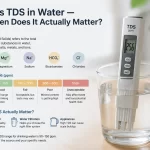
- Test your tap water TDS. A basic TDS meter (available for $10–$20) tells you within seconds whether your tap water has dissolved solids that a carbon filter alone cannot address. A reading above 300 ppm is a strong indicator that RO-level filtration will make a noticeable difference.
- Calculate your current bottled water spend. Multiply your monthly cases by 12 — most households are surprised by the annual figure. Compare that against the cost of filter replacements for a home system.
- Verify certification numbers independently. Whether buying bottled water or a home filter, look up the NSF certificate number at nsf.org before purchasing. Don’t accept “tested to NSF standards” as equivalent to actual third-party certification.
👉 Explore the Watpur ZENTA RO Water Purifier → — 7-stage filtration, 98% TDS removal, zero storage tank, three output models for every household size.
Author: [Author Name]
Last updated: 2026-07 · Recommended review cycle: every 12 months (filter costs, certification status, and bottled water pricing may change)
Disclaimer: Final equipment selection must be confirmed by a qualified water treatment engineer and must comply with local drinking-water regulations and certification requirements.
FAQ
Q1: Is spring water safer than purified water for drinking?
Neither is inherently safer for healthy adults — but they meet safety standards differently. Spring water is regulated by source and undergoes light filtration that preserves minerals; purified water is regulated by treatment outcome, requiring TDS below 10 ppm. For households with infants, pregnant women, or elderly members, purified water’s comprehensive contaminant removal provides more consistent protection, particularly against lead, nitrates, and bacterial contamination.
Q2: Does purified water lack minerals I need?
Purified water removes minerals along with contaminants, since RO membranes cannot distinguish between beneficial calcium and harmful lead. However, water contains only trace mineral quantities — far too small to meaningfully contribute to daily nutritional needs for people eating a balanced diet. Home RO systems with a remineralization stage (an optional upgrade on many units, including Watpur’s ZENTA series) add controlled amounts of calcium and magnesium back after filtration, improving taste and mineral balance without reintroducing contaminants.
Q3: How much does a family actually save by switching from bottled water to a home RO system?
The savings depend on what you’re currently buying. Against budget bottled water (~$700–$1,000/year for a family), annual filter costs of $50–$120 represent savings of $600–$900 per year after the system pays for itself — typically within 6–12 months. Against mid-range spring water ($1,200–$1,800/year), payback is typically within 4–8 months. Against premium brands, a home system can save over $4,000 per year once the unit cost is recovered.
Q4: How do I verify that an NSF certification on a water product is real?
Go to nsf.org/certified-products and search by the product name or the certificate number shown on the label. Any genuine NSF-certified product will appear in this public database. Phrases like “NSF-style tested,” “tested to NSF protocols,” or “meets NSF standards” are not equivalent — they indicate self-testing without independent third-party verification. Only the NSF listing itself confirms the certification is genuine.
Q5: How often do I need to replace filters on a home RO system?
Replacement intervals vary by stage and local water quality. In the Watpur ZENTA system, the PP sediment filter and activated carbon stages (Stages 1–3 and 5) typically require replacement every 3–6 months; the RO membrane (Stage 4) lasts 12–24 months under normal household conditions. Annual maintenance cost runs approximately $50–$120 for the standard 5-stage configuration — significantly lower than equivalent bottled water consumption. If your local tap water has high TDS or heavy sediment, the earlier stages will need more frequent replacement.