
RO Water Purifier — 7-Stage Filtration, 98% TDS Removal, Zero Tank
Product Introduction
The ro water purifier from Watpur uses a 0.0001-micrometer reverse osmosis membrane to remove up to 98% of total dissolved solids — including lead, fluoride, nitrates, and chlorine byproducts — from municipal tap water, delivering filtered water on demand at 380 to 760 liters per day depending on model. Unlike conventional RO systems that store water in pressurized tanks, the filters at the point of use, eliminating the secondary contamination risk that stagnant stored water carries.
Most households in the market for a home water filtration system are navigating the same frustrations: tap water that smells of chlorine, uncertainty about heavy metal levels in aging pipe infrastructure, and the ongoing cost of bottled water that plastic containers can’t guarantee is free of bacteria over time. Standard pitcher filters and basic countertop units reduce chlorine and some sediment, but they cannot touch dissolved heavy metals, salts, bacteria, or nitrates — contaminants that only a reverse osmosis system can reliably remove.
This page covers everything you need to select, configure, and order the right model for your household: a stage-by-stage explanation of how the filtration works, a model comparison by household size, certification details, installation options, and a use-case guide for families with infants, elderly members, or high daily water demand.
Choose Your Model — Quick Reference
Use this table to compare ro water purifier options across the range before reading further.
| Model | Daily Output | Best For | Voltage | Installation |
|---|---|---|---|---|
| 100G | ~380 L/day | 1–2 person / studio apartment | 110V / 220V | Wall / Counter / Under-sink |
| 400G (Most Popular) | ~570 L/day | Family of 3–4 | 110V / 220V | Wall / Counter / Under-sink |
| 600G | ~760 L/day | Large family / light commercial | 110V / 220V | Wall / Counter / Under-sink |
All models include 5-stage standard filtration. Stage 6 (Mineral Ball) and Stage 7 (UV Sterilizer) are optional upgrades available at checkout.
For a family of four on municipal water with moderate TDS, the 400G delivers the best balance of daily output, energy efficiency (30W), and cabinet footprint.
Why Standard Tap Water Needs RO-Level Filtration
What Municipal Water Actually Contains
Municipal tap water in most cities contains chlorine byproducts, trace heavy metals, and — increasingly — PFAS compounds detectable at sub-microgram levels. Water travels through distribution networks that include aging iron and copper pipes before reaching your faucet, picking up rust, sediment, and corrosion products along the way. Chlorine, added at treatment plants to kill biological contaminants, reacts with organic matter in transit to form trihalomethanes and haloacetic acids — disinfection byproducts linked to long-term health concerns at accumulation levels that exceed what a standard carbon filter addresses.
Why Pitcher Filters and Basic Countertop Units Fall Short
Activated carbon filters — the technology inside most pitcher-style water filtration systems and basic countertop units — are effective at reducing chlorine, odor, and certain volatile organic compounds. They achieve chlorine reduction rates above 95%. However, their TDS removal rate is typically below 10%, meaning dissolved heavy metals like lead and cadmium, dissolved salts, nitrates, fluoride, and bacterial contamination pass through essentially unchanged. Only a reverse osmosis membrane, operating at 0.0001 micrometers, is physically capable of rejecting dissolved ionic and molecular-level contaminants at a meaningful rate.
The Problem with Tank-Based RO Systems
Conventional RO drinking water filter systems store purified water in a pressurized holding tank, where it can sit for hours before reaching the faucet. Stagnant water — even filtered water — is a bacterial growth environment when tank maintenance is inconsistent. The eliminates this design entirely: water is processed at the moment of use, not stored. The wastewater ratio of the is managed through its dual-output design, with pre-filtered water routed to a secondary tap for washing and cooking use, reducing overall system waste compared to single-output RO configurations.
How the Works — All 7 Filtration Stages Explained
Stages 1–3: Pre-Filtration Protection
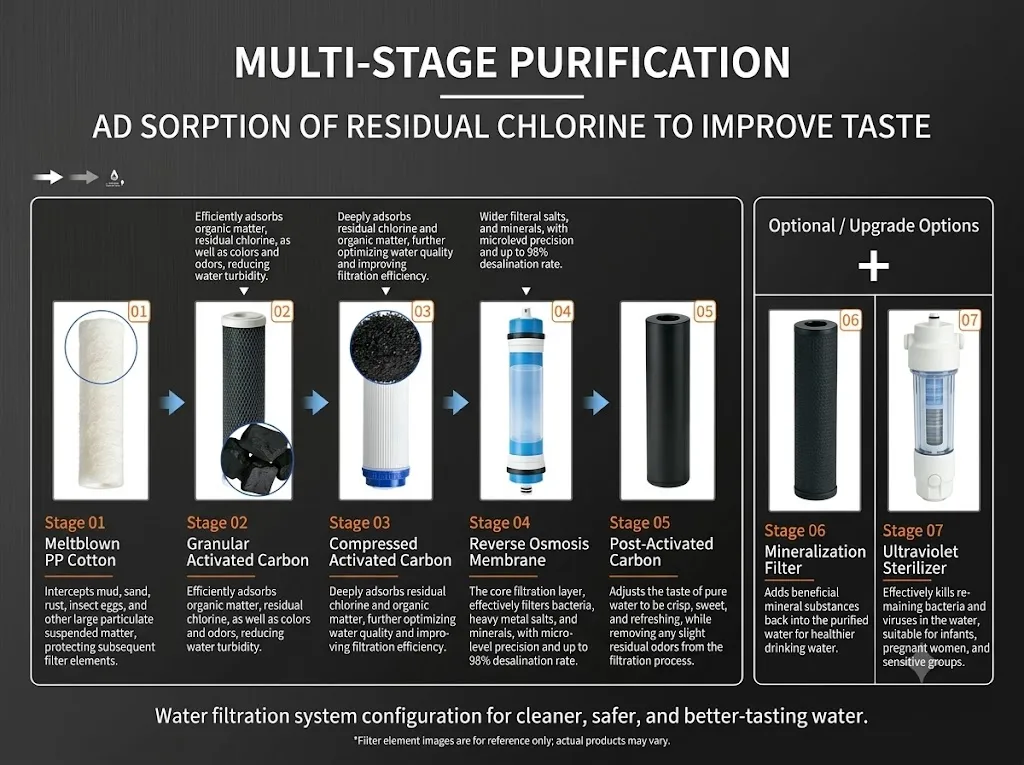
Three pre-filtration stages remove sediment, chlorine, and organic compounds before water reaches the RO membrane, protecting membrane integrity and extending its operational life significantly.
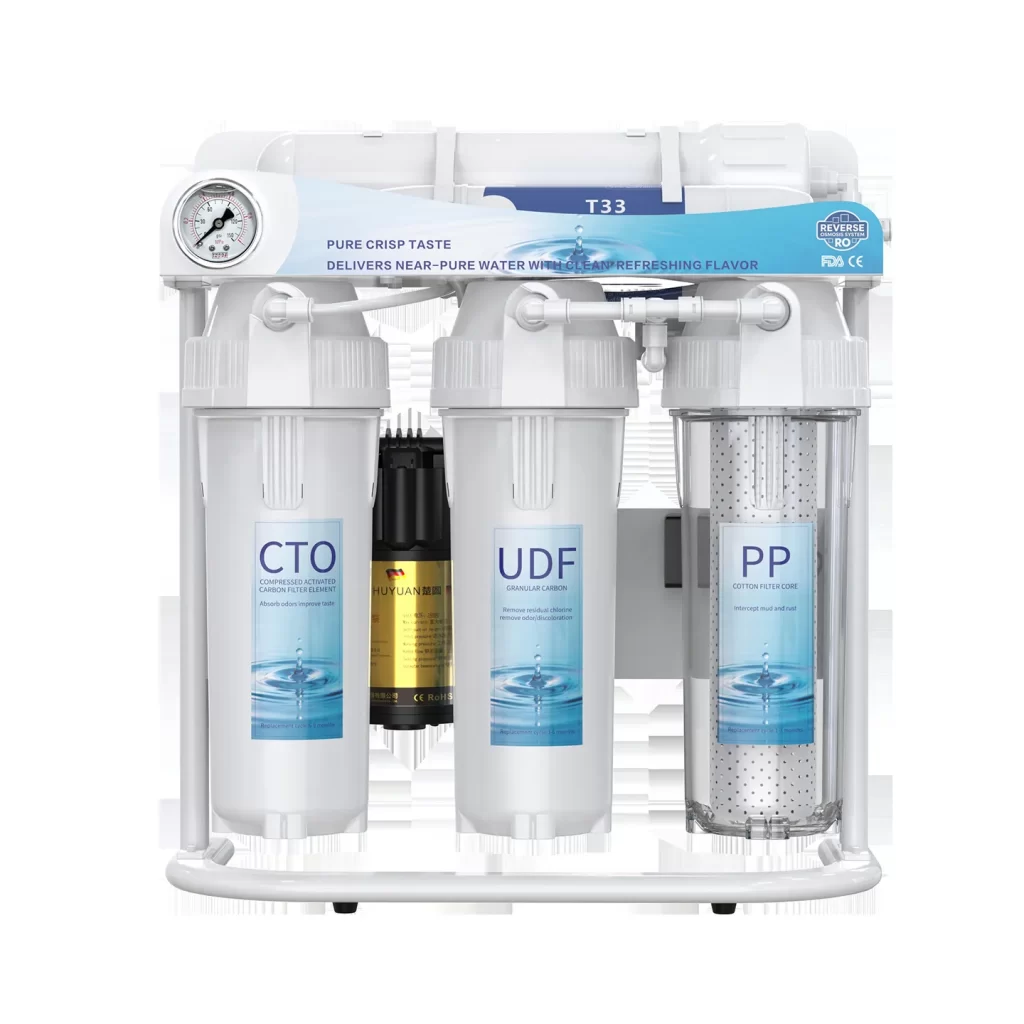
Stage 1 — PP Sediment Filter: Melt-blown polypropylene captures rust particles, sand, dust, insect eggs, and suspended solids down to 5 micrometers. This mechanical pre-filter is the primary barrier against the visible and near-visible debris introduced by aging pipe infrastructure, and its condition directly affects the service life of every downstream stage.
Stage 2 — Granular Activated Carbon (GAC/CTO): Granular activated carbon adsorbs free chlorine, chloramines, color-causing organic compounds, and disinfection byproducts from the water stream. Most users notice an immediate improvement in taste and odor after this stage alone. GAC has a high surface area per gram of media — typically 500–1,500 m² per gram — which is what makes it effective at capturing the chemical residues that give municipal tap water its characteristic smell.
Stage 3 — Compressed Activated Carbon (UDF): A second, denser carbon block provides deeper absorption of residual chlorine and micro-organic matter that passed through Stage 2. Compressed carbon has a larger effective contact surface and conditions the water before it enters the RO membrane, reducing chlorine concentration to near-zero — a critical step, as chlorine degrades polyamide RO membrane material over time.
Stage 4: The RO Membrane Core
A 5-stage reverse osmosis system removes up to 98% of TDS — including lead, fluoride, nitrates, heavy metals, bacteria, and dissolved salts — as tested under NSF/ANSI 58 performance conditions.
The RO membrane operates at a filtration precision of 0.0001 micrometers — 10,000 times finer than a human hair, and fine enough to reject ionic contaminants including lead (Pb²⁺), cadmium, mercury, barium, and radium, as well as pharmaceutical residues and PFAS compounds. Under inlet pressure of 0.2–0.4 MPa, water molecules pass through the semipermeable membrane while rejected contaminants are flushed to drain. The result is water with a TDS reduction rate of 98%, as validated under NSF/ANSI 58 test conditions.
Stage 5 + Optional Upgrades
Stage 5 — Post-Carbon Polish: After the RO membrane, water is chemically pure but can carry trace process odors from the filtration system itself. The post-carbon stage uses a compact activated carbon block to neutralize any residual taste or smell, delivering water that is clean, crisp, and neutral on the palate.
Stage 6 — Mineral Ball *(Optional Upgrade)*: RO filtration removes beneficial trace minerals — calcium, magnesium, potassium — along with contaminants. The mineral ball re-introduces these elements at controlled concentrations, improving taste balance and making the suitable as the primary mineral source for households that drink predominantly filtered water. Recommended for daily high-volume drinkers and families with growing children.
Stage 7 — UV Sterilizer *(Optional Upgrade)*: The UV sterilizer exposes output water to ultraviolet light at a wavelength that disrupts bacterial and viral DNA, achieving a 99.9% pathogen kill rate without chemical additives. This upgrade is particularly recommended for households with infants, pregnant women, elderly members, or anyone with a compromised immune system — and for any installation where the feed water source has a history of biological contamination events.
Not sure which configuration is right for your household? Contact Us
How the Differs from Conventional RO Systems
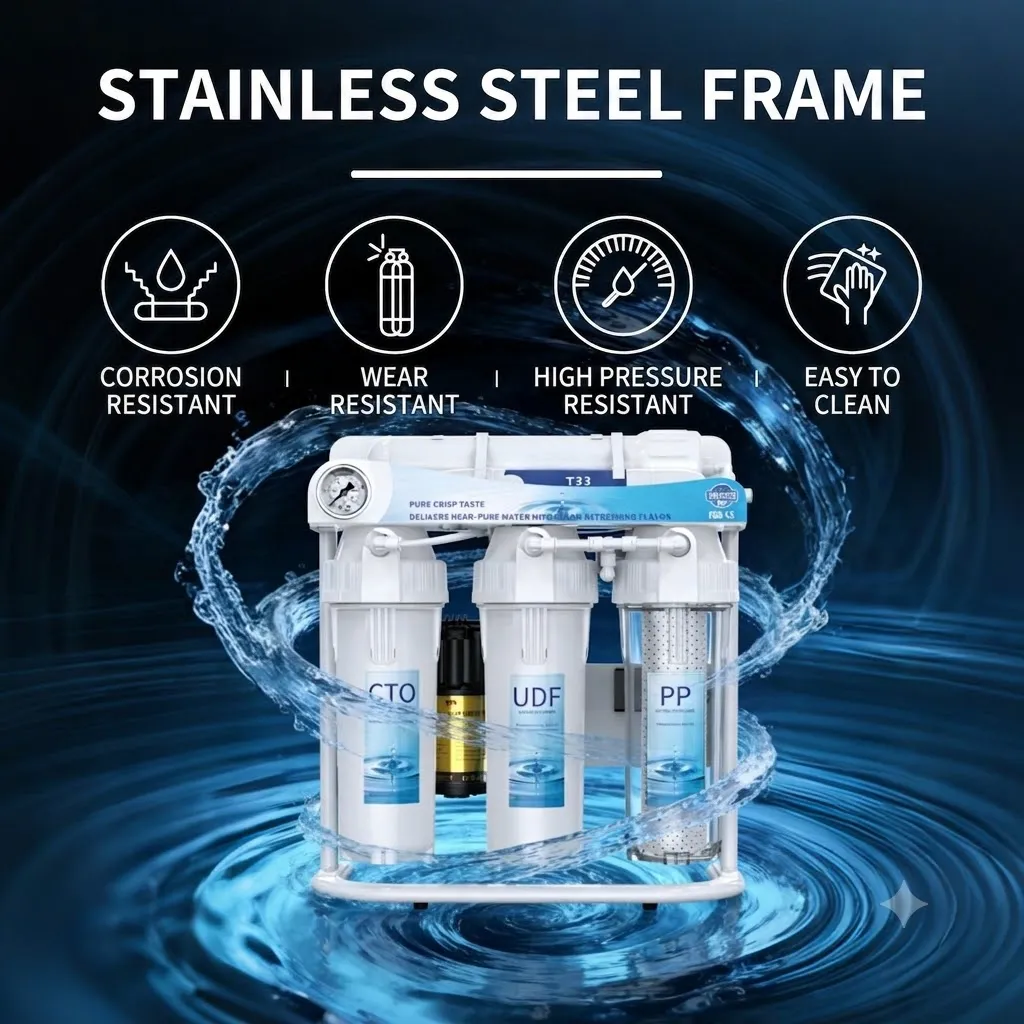
304 Stainless Steel Frame vs Plastic Housings
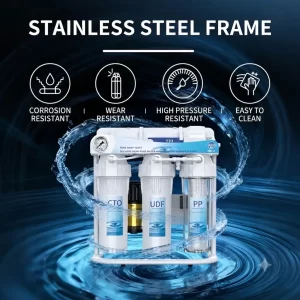
The 304 stainless steel frame is rated food-safe and corrosion-resistant, eliminating the plastic leaching risk common in budget RO housings. Most low-cost reverse osmosis water purifiers on the market use recycled plastic frames — materials that can leach plasticizers and volatile compounds into the very water they are supposed to purify, particularly in warm environments or under sustained pressure. Food-grade 304 stainless steel is inert under normal operating temperatures (5–38°C), pressure-rated, and resistant to biological fouling. It is the same material specification used in professional kitchen equipment and medical device housings.
Tank-Free On-Demand Output with Dual Water Lines
The produces two distinct water outputs from a single installation point. Ultra-pure RO water from Stage 5 (or 6/7 if upgraded) is routed to a dedicated drinking tap. Standard pre-filtered water — processed through Stages 1–3 only — is available from a secondary output for washing vegetables, rinsing dishes, and general kitchen use. This design means the RO membrane handles only drinking-volume water, not the full household demand, which extends membrane service life and reduces the effective wastewater ratio of the system.
Three Installation Modes for Any Kitchen Layout
The accommodates three distinct installation configurations — wall-mounted, countertop, and under-sink — within the same compact unit (360 × 210 × 450 mm, 9.2 kg). Wall mounting frees up cabinet and countertop space entirely. Countertop placement allows filter inspection and swap without tools. Under-sink installation conceals the unit completely. Most customers complete installation independently in under 30 minutes using a standard adjustable wrench; no licensed plumber is required.
Certifications and Safety Compliance
CCC Certification
The holds China Compulsory Certification (CCC), the mandatory safety certification required for electrical products sold in the Chinese market. CCC certification verifies that the meets national electrical safety standards, covering insulation, electromagnetic compatibility, and material safety for consumer products operating at 110V or 220V. This certification is administered by the Certification and Accreditation Administration of China (CNCA) and requires factory audits and product type testing before approval is granted.
ISO 9001 Quality Management Certification
Watpur’s manufacturing operations are certified to ISO 9001, the internationally recognized quality management system standard. ISO 9001 certification means that the design, production, and quality control processes for the have been independently audited and verified to meet documented standards for consistency, defect prevention, and continuous improvement. For buyers, this translates to predictable product quality across production batches — every unit shipped meets the same specification as the next.
In addition, the product has obtained the hygiene permit for water treatment equipment issued by Chinese health authorities (Certificate No.: Yue Wei Shui Zi [2024]-02-S0439)—one of the strictest regulatory certifications for household water purification products in the Chinese market.
Who Should Buy the — Use Case Guide
By Household Size
Select the model that matches your estimated daily drinking and cooking water consumption:
- 100G (~380 L/day): Single-person households and studio apartments with lower daily consumption. The most space-efficient option with the smallest footprint.
- 400G (~570 L/day): The standard choice for families of three to four. Balances daily output with 30W energy consumption and covers typical drinking, cooking, and baby formula needs with capacity to spare.
- 600G (~760 L/day): Designed for households of five or more, or for light commercial environments — small cafés, offices, or clinic waiting rooms — where high daily output is the primary requirement.
By User Profile
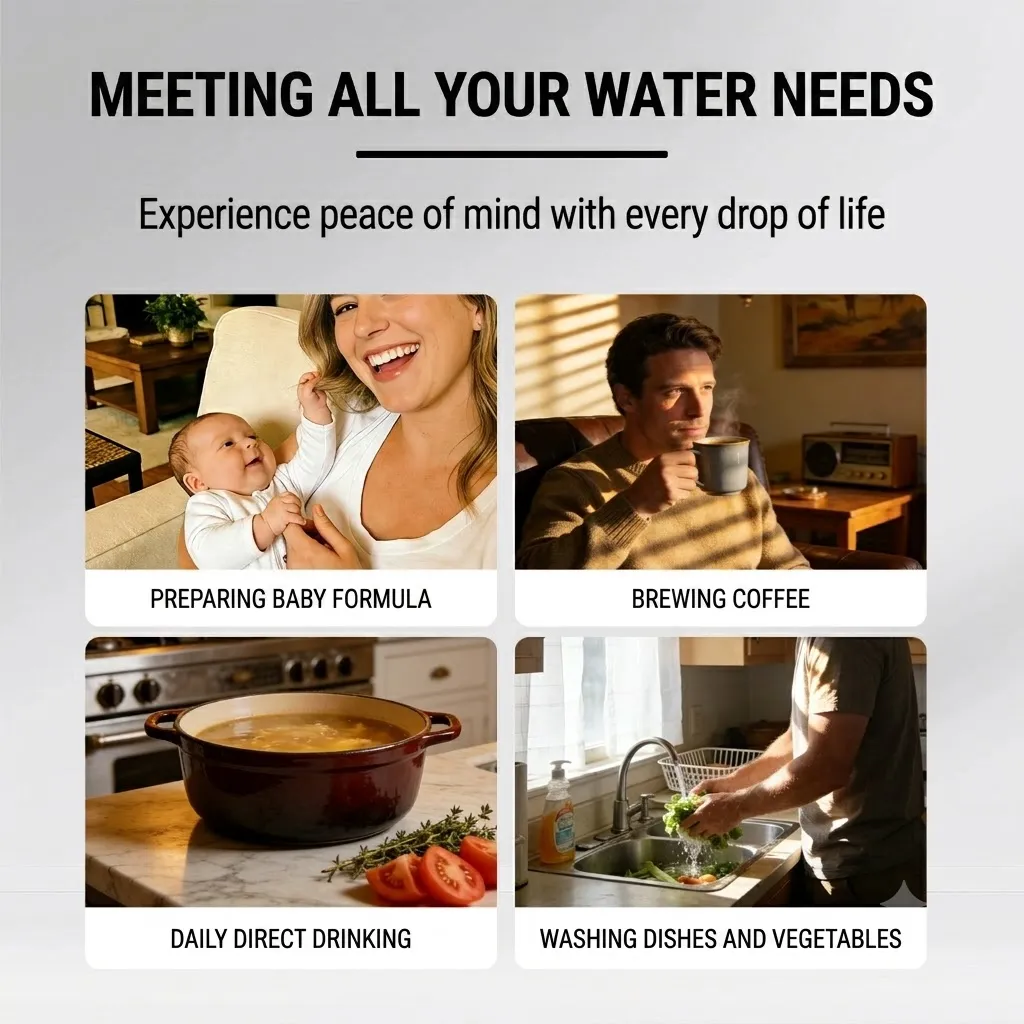
Infants and young children are significantly more vulnerable to waterborne lead, nitrates, and bacterial contamination than adults, due to differences in metabolic processing and developing organ systems. The RO membrane removes these contaminants at the 98% TDS rejection level, making it a reliable water source for infant formula preparation.
Pregnant women face elevated risk from heavy metal exposure, nitrate contamination, and biological waterborne illness during pregnancy and breastfeeding. The removes the contaminant categories that represent the primary water-quality risks for prenatal health.
Elderly household members accumulate decades of low-level contaminant exposure through drinking water, and reduced kidney function makes it harder to excrete trace metals and chemical byproducts. Switching to RO-filtered water reduces ongoing exposure at the intake level.
Health-conscious adults and specialty beverage drinkers — including those who brew coffee or tea — will notice that chlorine suppresses aromatic compounds in both coffee and tea. filtered water allows the true flavor profile of quality beans and leaves to come through, producing a cleaner, more aromatic cup.
Water Source Compatibility
The is designed for municipal tap water with an inlet pressure of 0.2–0.4 MPa (approximately 29–58 PSI). If your household water pressure falls below this range, a booster pump can be added to the installation — contact Watpur before purchase if you are unsure of your local line pressure. The is not recommended for untreated well water or high-turbidity surface water sources without upstream pre-treatment, as suspended solids above the PP filter’s rated capacity will shorten Stage 1 and Stage 3 service life significantly.
Conclusion
The ro water purifier from Watpur delivers hospital-grade reverse osmosis filtration in a compact, tank-free, 304 stainless steel system that installs in three configurations and scales across three output capacities — making it one of the most specification-dense home water purification systems in its category. For buyers comparing ro water purifier options by filtration depth, material quality, and per-stage performance, the stands apart from plastic-housed, tank-dependent systems that sacrifice long-term purity for lower upfront cost.
Three actions before you order:
- Test your household TDS. A TDS reading above 300 ppm indicates dissolved solids that a carbon-only filter cannot address — RO is the correct solution.
- Confirm your installation space. The measures 360 × 210 × 450 mm and fits in standard under-sink cabinets, on countertops, or wall-mounted above the sink.
- Match the model to your household size. 1–2 people → 100G; family of 3–4 → 400G; 5+ or light commercial → 600G.
After-Sales Service
14-Day Quality Guarantee
Full refund or free replacement within 14 days of delivery for quality defects or items not as described (photo/video proof required)
Price Protection
If the same product drops in price within 14 days of your purchase, we refund the difference
24/7 Support
Round-the-clock customer support
FAQ
Filter replacement intervals vary by stage. The PP sediment filter (Stage 1) and activated carbon stages (Stages 2, 3, and 5) require replacement every 3 to 6 months depending on local water quality and daily usage volume. The RO membrane (Stage 4) typically lasts 12 to 24 months under normal household conditions. Annual maintenance cost for a standard 5-stage configuration is generally $50–$120 (market reference), making whole-life cost significantly lower than equivalent bottled water consumption.
The removes up to 98% of TDS at the RO membrane stage, including lead, cadmium, mercury, barium, nitrates, fluoride, chlorine and its byproducts, dissolved salts, bacteria, viruses, pharmaceutical residues, and PFAS compounds. Pre-filtration stages additionally capture sediment, rust, sand, and suspended particulates above 5 micrometers. The optional UV sterilizer provides a supplementary 99.9% pathogen kill rate for biological contaminants.
Regarding product safety and electrical compliance, CCC certification (China) and CE certification (Europe) serve as key market access standards. In terms of filtration performance, NSF/ANSI 58 is the benchmark standard for reverse osmosis (RO) systems in the North American market, used to verify Total Dissolved Solids (TDS) removal efficiency under standardized testing conditions; meanwhile, NSF/ANSI 53 covers the removal of health-related contaminants such as lead and cysts. The product has obtained CCC certification and ISO 9001 quality management system certification, as well as a Chinese health permit (Certificate No.: Yue Wei Shui Zi (2024)-02-No. S0439).
Yes. This reverse osmosis (RO) membrane removes heavy metals, nitrates, bacteria, and dissolved solids—key water quality concerns that can affect an infant's health. The water produced by this system is suitable for preparing infant formula. Households with infants may also consider upgrading to a 7th-stage ultraviolet (UV) sterilization unit to add an extra layer of biological safety protection.
Yes. The product comes with all the necessary accessories, hoses, and fittings for wall-mounted, countertop, and under-sink installations. The installation guide provides detailed, step-by-step instructions for each method. Most users can complete the entire installation themselves in less than 30 minutes using only a standard adjustable wrench; no licensed plumber is required for connection to standard municipal water lines.
Send Inquiry
Fill in the information below and we'll contact you soon
Please specify your requirements:
- What type of water purifier do you need?
- What is the filtration capacity you require (L/hr)?
- What is your installation space available?
- What is your expected daily water consumption?
- What is your project timeline and usage frequency?
Related Products
Related Articles
July 16, 2026
What Is an RO System? How Reverse Osmosis Works, What It Removes, and Whether Your Home Needs One
July 16, 2026
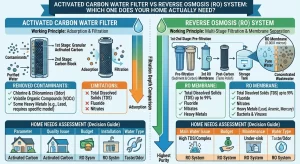
Activated Carbon Water Filter vs RO System: Which One Does Your Home Actually Need?
July 13, 2026
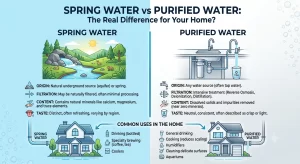
Spring Water vs Purified Water: What’s the Real Difference for Your Home?
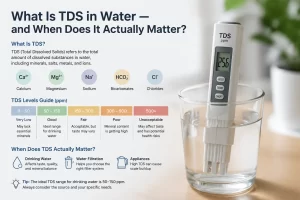
July 10, 2026